
Chimney Care Company: Chimney Sweeping Near Me in Mason, OH
At Chimney Care Company, we keep Mason fireplaces working as reliably and as safely as possible with thorough chimney sweeping and inspection services. Our team treats every home like our own, and we tailor each appointment to your system’s age, fuel type, and use pattern so you get the right level of cleaning, the right recommendations, and a flue that drafts as efficiently as possible.
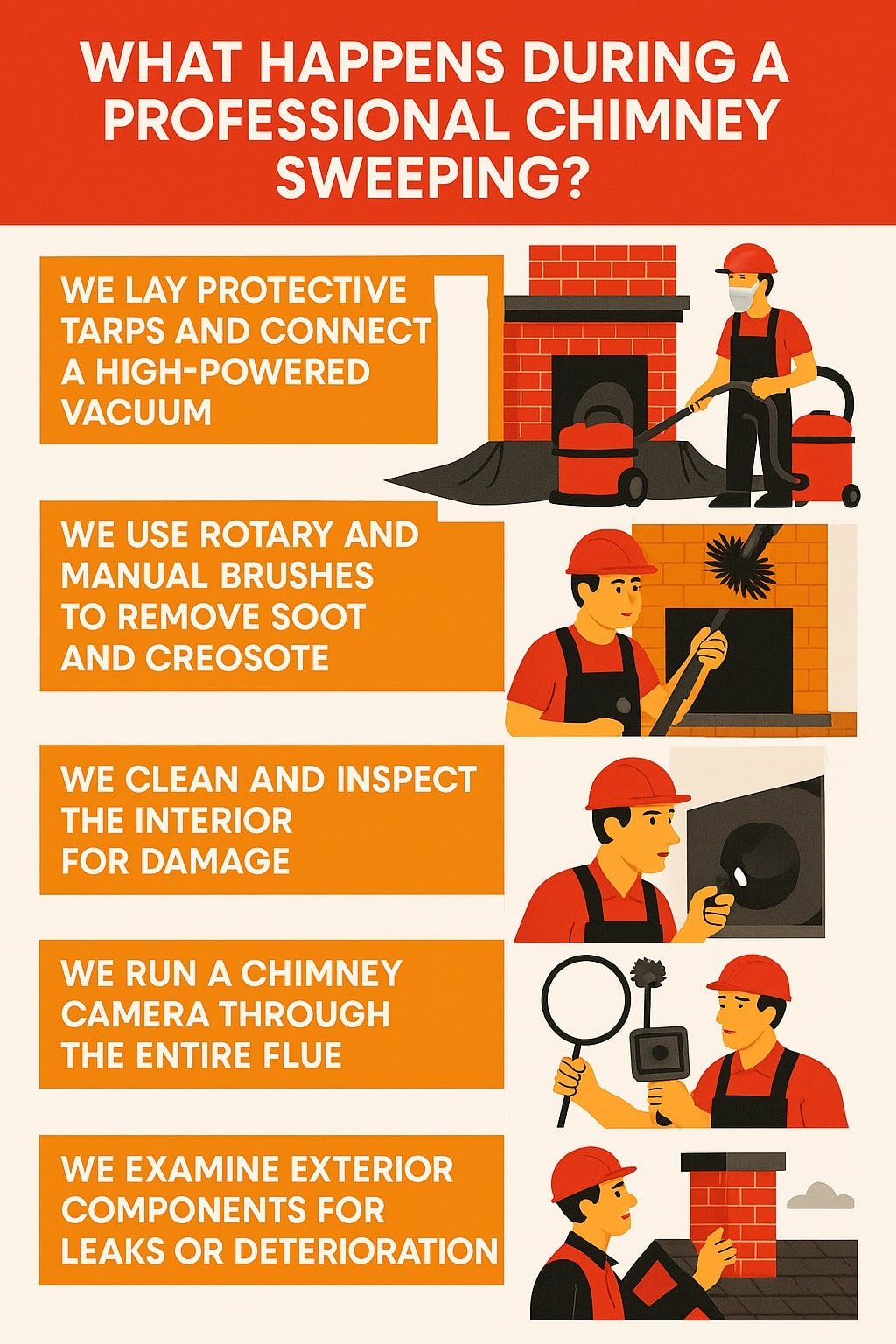
What Happens During a Professional Chimney Sweep?
Our process goes far beyond a quick brush and vacuum. We use specialized tools, video equipment, and industry-leading techniques to clean your chimney and identify early warning signs of trouble.
During a sweep, our technicians:
- Lay protective tarps and connect a high-powered vacuum to contain soot and dust.
- Use rotary and manual brushes to remove soot and creosote from the flue walls.
- Clean and inspect the smoke chamber, firebox, damper, and cap for damage.
- Run a chimney camera through the entire flue to check for cracks, gaps, and buildup.
- Examine exterior components like the crown, flashing, and masonry for leaks or deterioration.
- Perform a draft test to ensure the chimney vents properly.
You’ll receive a detailed inspection report with photos and recommendations, so you know exactly what condition your chimney is in before the next fire.
Why Should Mason Homeowners Schedule Annual Chimney Sweeping?
Mason’s combination of humid summers and cold, damp winters makes chimney care essential. Moisture, temperature shifts, and creosote buildup work together to weaken your chimney faster than you might think. Annual sweeping helps your system:
- Prevent Chimney Fires: Creosote is highly flammable. Even a thin layer can ignite under high heat. We remove all three stages of buildup (soot, flaky creosote, and hardened glaze) to minimize fire risk.
- Preserve Masonry Integrity: Moisture and soot create acidic residue that eats away at mortar joints. Regular cleaning keeps surfaces intact and slows structural decay.
- Maintain Draft Efficiency: A clean flue draws better, allowing smoke and carbon monoxide to exit more efficiently. This improves burn quality and reduces smoke inside the home.
- Eliminate Odors: Soot, damp residue, and decaying organic debris can produce strong, smoky smells, especially during Mason’s humid summer months. Sweeping removes those odor sources.
- Extend Appliance Lifespan: Gas and wood-burning appliances last longer when the venting system stays free of corrosive residue and moisture.
Even if your fireplace only sees a few fires a year, residue still builds up gradually. A simple annual sweep can make a major difference in both safety and performance.
How Do Mason Chimneys Handle High Winds & Tornado Season?
Mason experiences occasional severe storms and strong winds throughout the year, which can stress exposed masonry chimneys. After heavy winds, homeowners often notice rattling caps, missing bricks, or new water leaks around the chimney base. Our technicians watch for storm-related damage such as:
- Loose or Missing Chimney Caps: Caps protect against rain, debris, and animal entry. High winds can loosen poorly secured models, allowing moisture and debris to pour directly into the flue.
- Cracked or Uplifted Crowns: Crown cracks allow water to penetrate and freeze, widening gaps. If the crown slopes inward or holds water, we’ll recommend rebuilding or resurfacing it.
- Shifted or Leaning Stacks: A visible lean or separated mortar joint can indicate foundation movement or severe structural stress from wind gusts.
- Lifted Flashing: Wind can peel flashing loose from the roofline, opening pathways for leaks behind siding or drywall.
After Heavy Rain or Flooding, What Steps Should You Take Before Using the Fireplace Again?
Moisture mixes with soot to create acidic compounds that attack steel dampers, smoke chamber parging, and clay liners. If the flue got wet, creosote can soften, then reharden into a glossy glaze that is very difficult to remove. Saturated brick and mortar also take time to dry. Lighting a fire while the chimney is still damp can flash steam through hairline cracks, which widens gaps and can force smoke back into the room. You might also notice a strong musty odor after a storm, a sign of standing moisture in the smoke chamber or ash pit.
During a post-storm visit, we:
- Identify the source of any leaks (crown, flashing, or liner).
- Apply breathable waterproofing to the exterior.
- Repair cracks or gaps that allowed water intrusion.
- Clear any washed-in debris or residue from the flue.
If you use gas, we look closely for rust flakes, scale, and burner contamination. We dry and clean the system, recommend waterproofing with a vapor permeable treatment, and address any crown or mortar repairs. A few days of patience and a thorough check now will help the system vent more cleanly and extend its life through future wet weather.
How Does Freeze/Thaw Weathering Affect Masonry Chimneys in Mason, OH?
In fall and winter, daytime thaw and overnight freeze repeats again and again. Water that entered hairline cracks or porous brick during a warm afternoon expands as it freezes at night. The expansion pries apart mortar joints, pops faces off bricks, and opens channels where even more water can enter. By spring, homeowners often see spalling, powdery efflorescence, and loose mortar at the top third of the chimney where weather exposure is strongest.
Sweeping visits are the perfect time to get ahead of this cycle. If the crown is thin, cracked, or sloped toward the flue instead of away, we resurface it with a properly sloped, reinforced crown system and a bond break at the flue tile. If mortar joints are recessed, we repoint with a compatible mortar so the joints shed water rather than catch it.
If bricks are soft or already spalling, we replace those units and relieve trapped moisture. Once masonry is sound and dry, we apply a vapor permeable water repellent. The key is breathability. A quality siloxane or silane treatment lets interior moisture escape as vapor, while shedding liquid water so freeze/thaw has less to work with. Add a well-fitted cap and properly lapped flashing, and you have a chimney that resists winter far better.
We pair these repairs with interior cleaning because dry, clean flues warm up faster and establish draft more consistently, which reduces condensation. That means less winter moisture inside the stack and fewer chances for accelerated decay.
Are Older or Unlined Chimneys More Prone to Interior Decay?
Yes. Many older Mason homes built before the 1980s have unlined or partially lined chimneys that allow heat, smoke, and acidic gases to contact raw masonry. This slowly erodes the mortar between bricks or flue tiles, often leaving gaps that are invisible from the exterior.
Signs your chimney may have hidden internal decay include:
- A persistent smoky odor in rainy or humid weather
- White streaks or crumbling mortar inside the firebox
- Smoke backup or difficulty maintaining draft
- Soot flakes or pieces of tile falling into the firebox
During sweeping we rely on a full-length camera to reveal what the eye cannot. We look for gaps between tiles, missing mortar at joints, fractured tiles, and signs of past overheating. We also check for smoke chamber defects like heavy corbeling or uncoated brick ledges. If we discover widespread joint failure or tile damage, you still have good options.
In many cases we can restore a clay tile liner by resurfacing with a ceramic or refractory system that seals joints and smooths the passage. In other cases, we recommend a properly sized stainless steel liner, insulated where required, that matches the appliance flue collar for better draft and reduced condensation. Both approaches give your fireplace or stove a continuous, smoother, easier-to-clean vent pathway, and they help protect surrounding masonry from acidic byproducts in the future.
What Happens If You Skip Your Annual Chimney Sweep?
One missed sweep might not sound serious, but it can quickly allow enough creosote to create a fire hazard. Creosote buildup also restricts airflow, causes odor issues, and accelerates corrosion. This can cause you to experience:
- Restricted Draft: Creosote narrows the flue, forcing smoke back into your home.
- Increased Fire Risk: Hardened glaze ignites easily under high temperatures.
- Corrosion & Damage: Soot absorbs moisture, forming acids that eat away at metal liners and dampers.
- Carbon Monoxide Exposure: Poor ventilation increases the risk of toxic gas entering your living space.
Routine sweeping is a small investment that protects against thousands in repair costs—and keeps your home and family safer through every Ohio winter.
Why We Love Serving Mason, OH
Mason is a city that blends family-friendly living with fun, adventure, and community pride. From world-class tennis at the Western & Southern Open to thrills at Kings Island, there’s always something happening nearby. Locals enjoy scenic spots like Corwin M. Nixon Park and Pine Hill Lakes Park, along with the small-town hospitality that makes Mason feel like home.
We’re proud to serve this community, helping homeowners protect their fireplaces and enjoy cozy nights in comfort and confidence.
Schedule Your Mason, OH Chimney Sweep Today
If it has been a year, if you changed fuels, if a storm rolled through, or if you notice odor, smoke spillage, or draft inconsistency, we are ready to help. Chimney Care Company delivers detailed chimney sweeping, camera inspections, and practical repair plans that fit your home and your goals. Call or message us today to book your appointment in Mason, and enjoy a fireplace that lights easier, drafts better, and serves your family as safely and as reliably as possible through every Ohio season.