
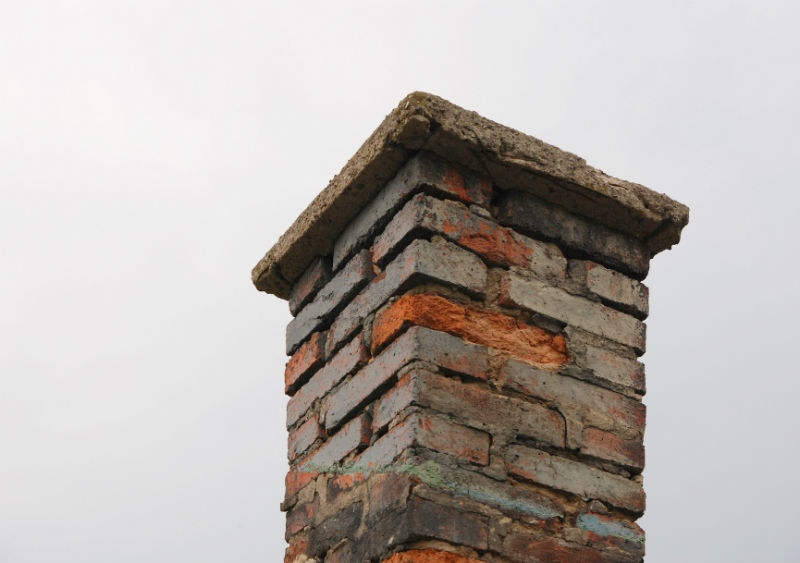
Your chimney is out there to face all of the elements. Weather, particularly moisture, can be incredibly damaging to your chimney. In fact, the Chimney Safety Institute of America (CSIA) has dubbed water a chimney’s worst enemy and encourages homeowners to do all they can to protect their chimneys from moisture. At The Chimney Care Co., we recommend our customers consider investing in waterproofing services to help protect their chimneys and their homes from water damage.
How Does Water Damage a Chimney?
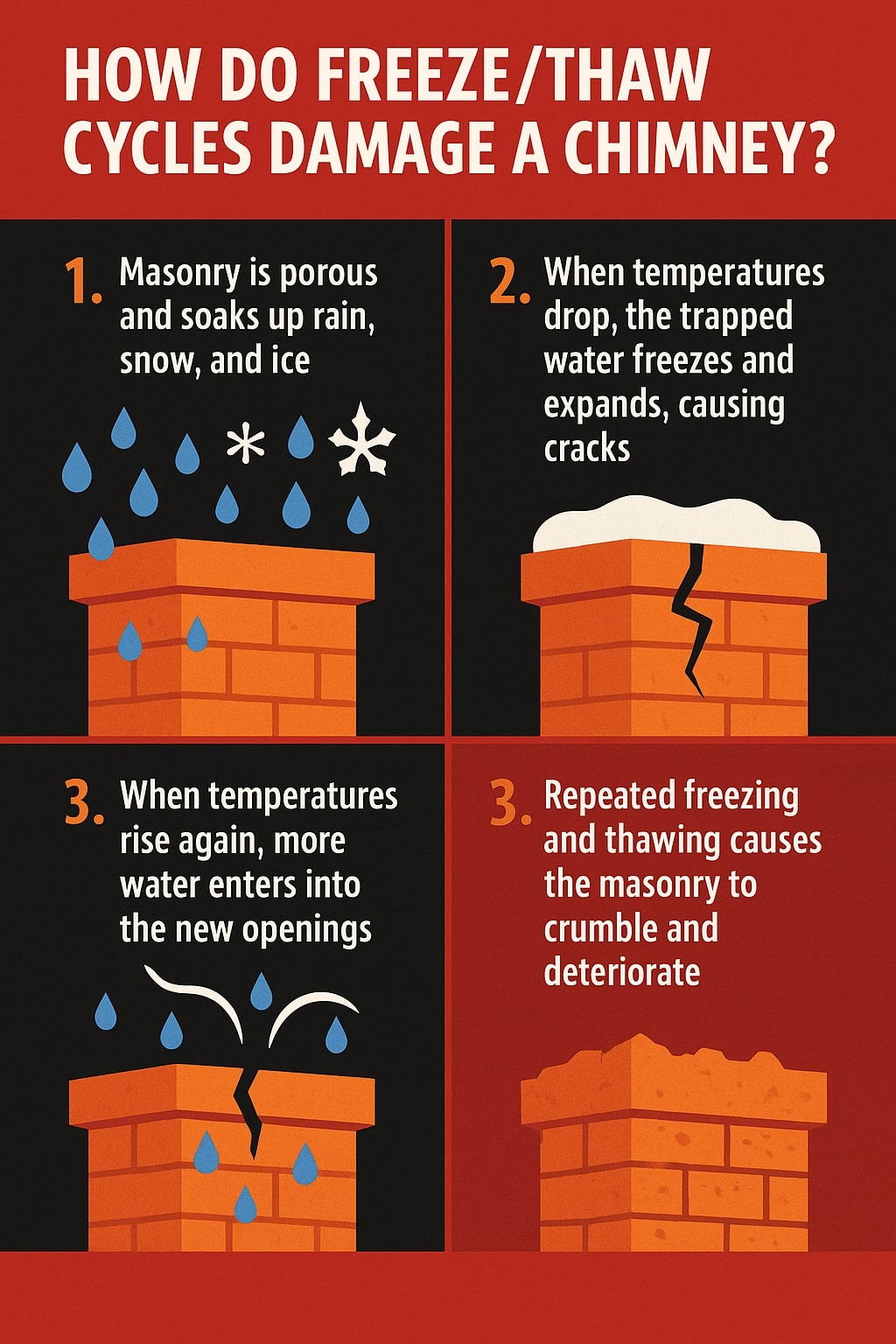
The biggest danger from water comes as a result of the freeze-thaw cycle. When water hits the sides of your chimney, weather from rain, snow or ice, your chimney’s porous masonry soaks up some of that water. When temperatures drop, the water inside the chimney’s walls freezes and expands, causing cracking and crumbling. Over time, the constant freezing and thawing of the water inside your chimney’s masonry can break down your chimney’s structure and compromise your chimney’s ability to contain flames, heat and smoke.
Moisture can damage your chimney and fireplace in other ways, as well. Water that finds its way into your flue can mix with creosote and cause an unpleasant smell to fill your home. The water also can lead to rusted dampers, fireplace doors and dampers, or cracked flue tiles. If the water seeps into your home’s structure, it can cause damage to your home, including stained ceilings, sagging wallboard and rotting joists.
How Can Waterproofing Protect My Chimney?
One of the most effective ways to protect your chimney is with a waterproofing treatment. A waterproofing application prevents your chimney’s masonry from soaking in nearly 100 percent of water. At the same time, it allows your chimney’s masonry to “breathe,” so any moisture doesn’t become trapped in the chimney’s walls, and the smoke and gases from your fireplace can still exit your chimney normally. Most chimney waterproofing applications come with a five to 10 year guarantee for protecting your chimney.
How Else Can I Protect My Chimney From Leak Damage?
There are other steps you should be taking to keep water from damaging your chimney and fireplace. As part of your annual chimney sweeping and inspection, you should ask your chimney sweep about the state of three important chimney components.
- A secure chimney cap prevents water from flowing down your chimney’s flue.
- A properly formed chimney crown that is free from cracks or damage helps protect the outer walls of your chimney from precipitation and directs water away from your chimney’s opening.
- You also will want to check your chimney’s flashing, the metal barrier around your chimney’s base, to make sure it isn’t corroded or cracked.
Reach Out Soon
If you’re concerned about water’s effects on your chimney, or if you’ve noticed early signs of water damage, call the chimney experts at The Chimney Care Co. We can talk to you about waterproofing and other ways to protect your chimney from water damage. We also can inspect your chimney for signs of water damage and help you detect and repair any problems.